Organic Traffic vs Paid Traffic: What’s the Difference?
When people search for a product, service, or business on Google, they can reach a website in different ways. Some visitors come from unpaid search results, while others arrive after clicking an advertisement. These two sources are commonly known as organic traffic and paid traffic.
Understanding Organic Traffic vs Paid Traffic is important for businesses that want to increase website visitors, generate leads, and build a strong online presence.
Organic traffic is generated through search engine visibility, usually with the help of SEO. Paid traffic, on the other hand, comes from advertising campaigns where businesses pay platforms such as Google or Meta to reach potential customers.
Both approaches have different costs, benefits, timelines, and strategies. So, which one should your business focus on?
Let’s compare them in detail.
What Is Organic Traffic?
Organic traffic refers to visitors who reach your website through unpaid search engine results.
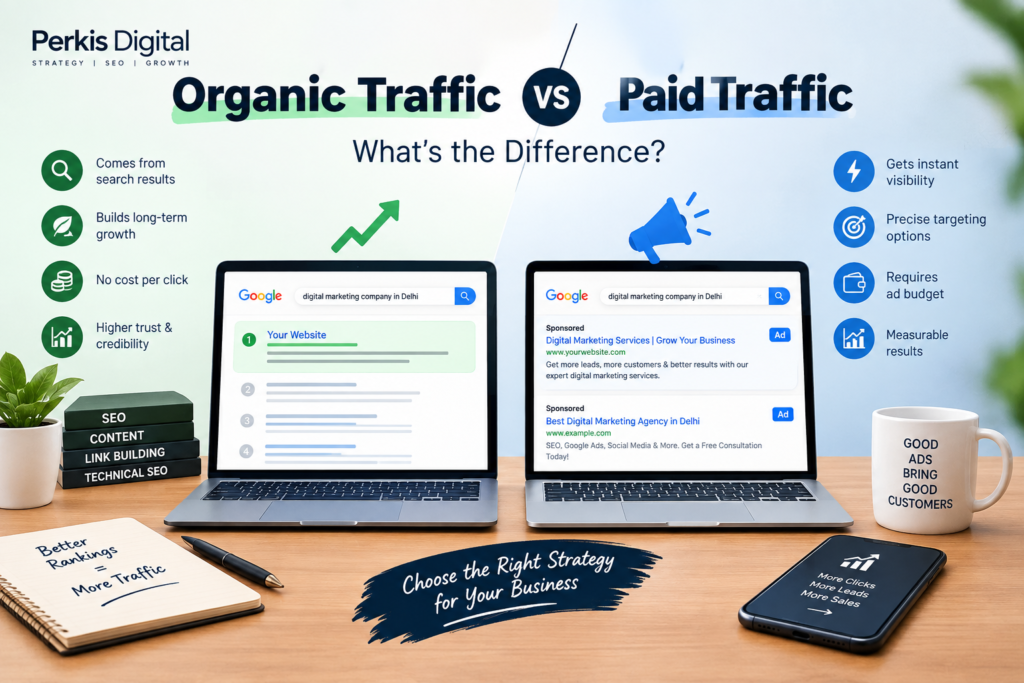
For example, a person searches Google for “SEO services in Delhi.” Google displays several results. If that person clicks your website from the normal search results rather than an advertisement, that visit is organic traffic.
Organic traffic is mainly associated with Search Engine Optimization (SEO).
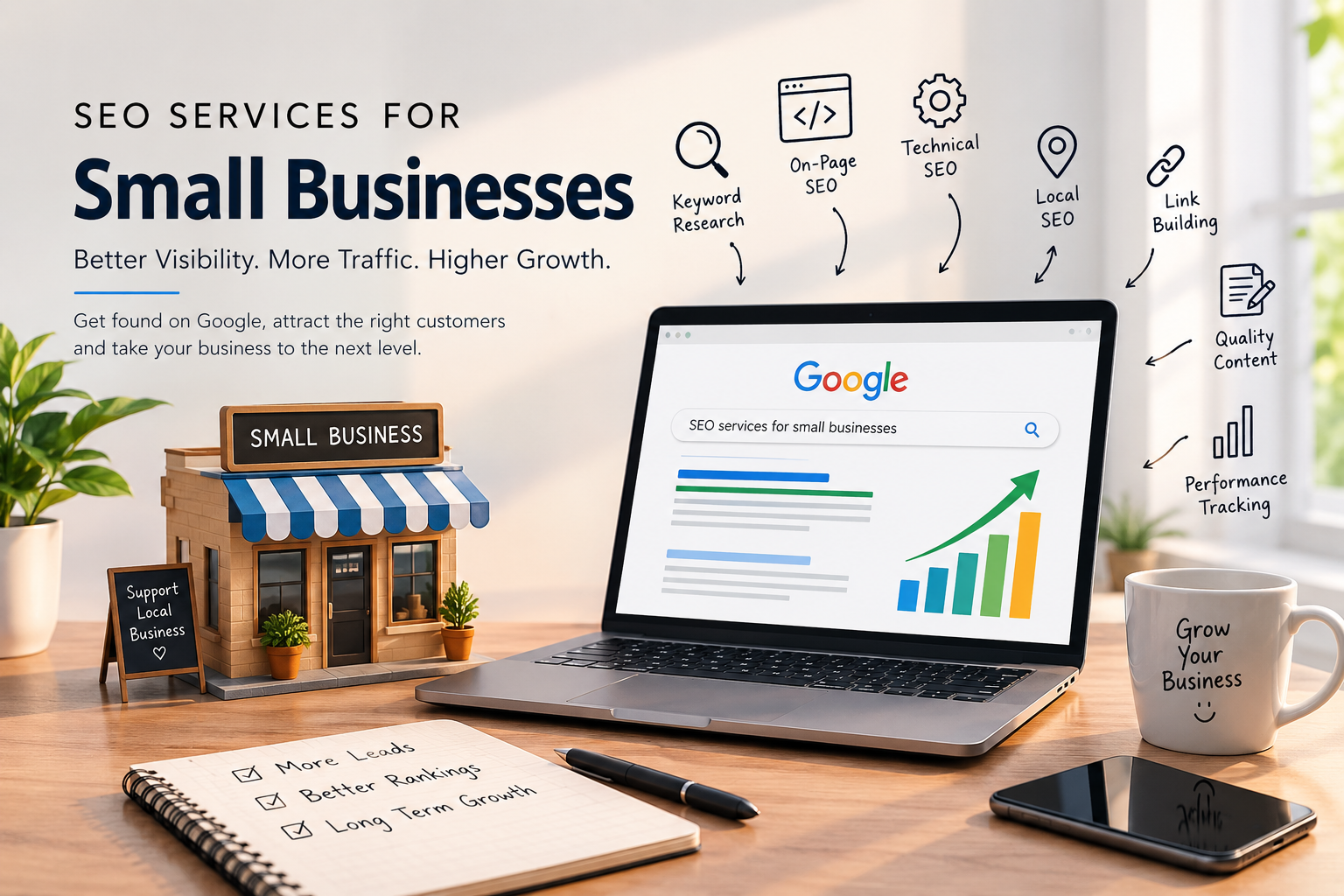
Businesses work on different areas of their websites to improve their chances of appearing for relevant searches. These areas can include:
Keyword research
Content optimization
On-page SEO
Technical SEO
Internal linking
Website speed
Mobile optimization
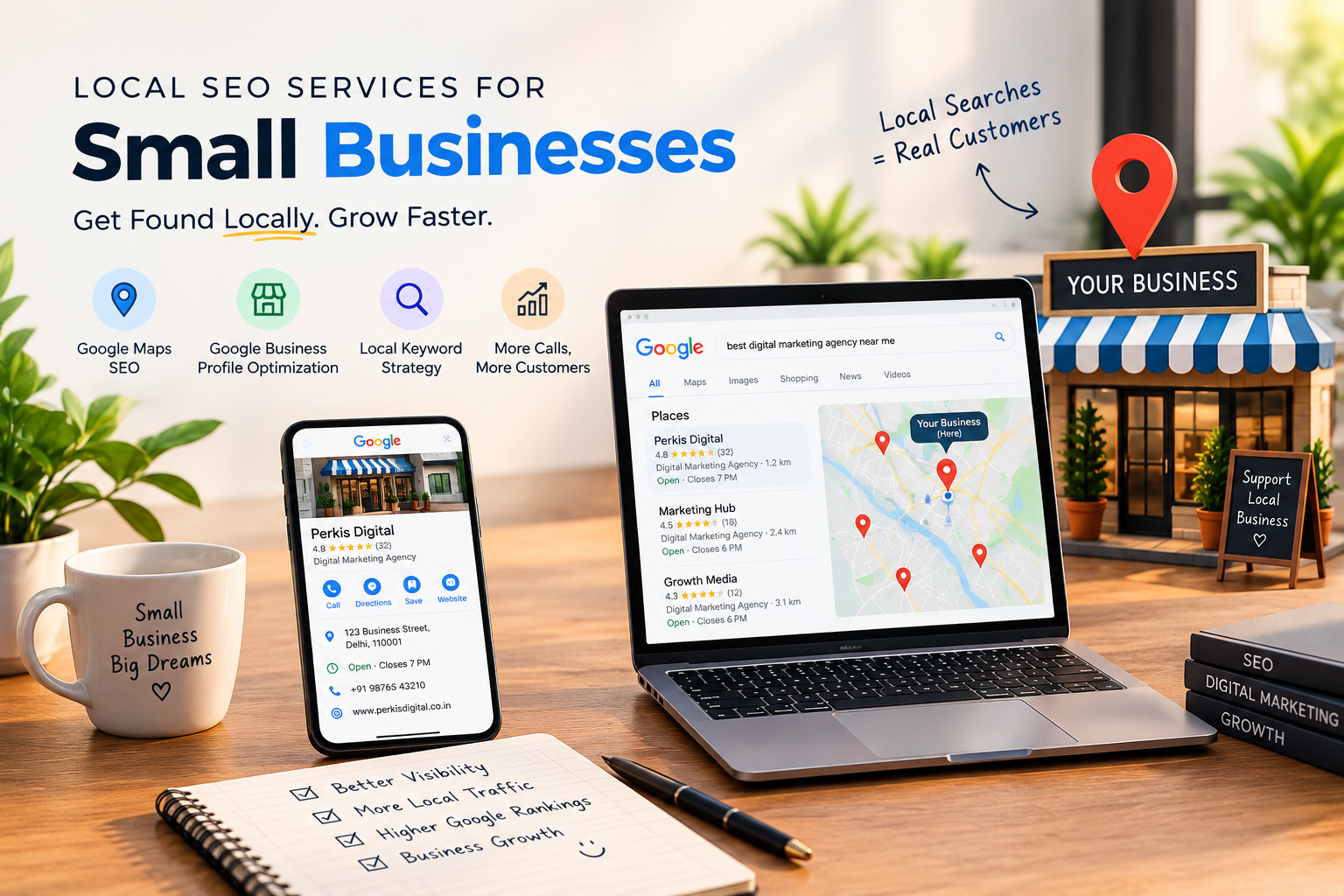
Local SEO
Backlink building
User experience
The major difference is that businesses do not pay Google for every organic click.
However, SEO requires consistent effort. A website may need time to build search visibility, especially when competing for highly searched keywords.
What Is Paid Traffic?
Paid traffic is generated through online advertising.
Instead of waiting for a website to rank naturally in search results, a business can create an advertising campaign and pay to display its advertisement to a selected audience.
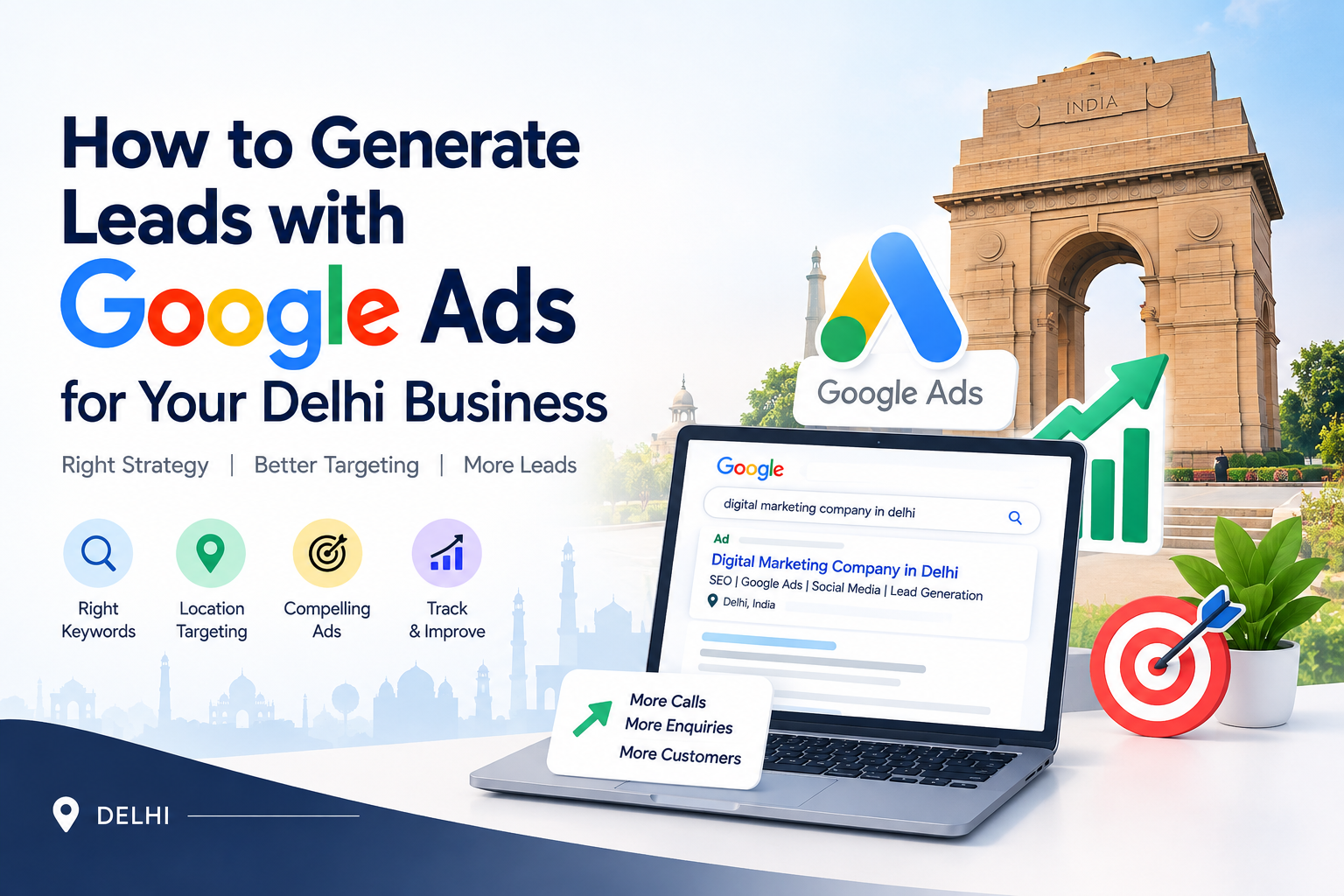
For example, when someone searches for “digital marketing company in Delhi,” they may see sponsored results above or around the organic search listings.
If the person clicks one of those advertisements, the website receives paid traffic.
Paid traffic can come from platforms such as:
Google Ads
Meta Ads
Instagram Ads
YouTube Ads
LinkedIn Ads
Other advertising networks
Paid advertising can be useful when a business wants faster visibility, specific targeting, or immediate promotion of a product or service.
Organic Traffic vs Paid Traffic: Key Differences
The easiest way to understand Organic Traffic vs Paid Traffic is to compare how each channel works.
| Factor | Organic Traffic | Paid Traffic |
|---|---|---|
| Main source | Unpaid search results | Online advertisements |
| Main strategy | SEO | PPC and paid advertising |
| Cost per click | No direct payment for each click | Usually involves advertising cost |
| Speed | Usually takes time | Can provide faster visibility |
| Long-term potential | Can continue generating traffic after rankings are established | Depends on active campaigns |
| Budget | SEO investment is required | Requires advertising budget |
| Targeting | Based largely on search intent and relevance | More direct audience and keyword targeting |
| Main challenge | Competition and ranking time | Cost and campaign optimization |
| Best suited for | Long-term visibility | Faster exposure and campaigns |
This comparison shows that the two channels are not exactly the same. They are designed to achieve different marketing objectives.
How Does Organic Traffic Work?
Organic traffic usually starts with a search.
The process can look like this:
User searches → Search engine displays results → User chooses a result → Website receives visitor
To increase organic visitors, businesses create useful content and optimize important website pages around relevant search terms.
For example, a digital marketing agency may create pages and blogs about:
SEO services
Google Ads
Local SEO
Social media marketing
Website optimization
Digital marketing services
If those pages gain search visibility, they can bring visitors to the website without requiring payment for every click.
However, ranking is not simply about repeating a keyword.
A good SEO strategy also considers content quality, search intent, website structure, technical performance, internal links, backlinks, mobile experience, and other factors.
How Does Paid Traffic Work?
Paid traffic works through advertising campaigns.
A business selects its target audience or keywords, creates advertisements, sets a budget, chooses landing pages, and launches the campaign.
The process can be simplified as:
Target audience → Advertisement → Click → Landing page → Conversion
Depending on the advertising platform, businesses can target users using factors such as location, search terms, interests, demographics, devices, and remarketing audiences.
Paid campaigns can therefore be useful for businesses that want to promote specific services, products, offers, or landing pages.
Benefits of Organic Traffic
1. It Can Support Long-Term Visibility
One of the biggest benefits of SEO is its long-term potential.
When a website earns strong search visibility for relevant queries, its pages can continue attracting visitors over time.
This does not mean rankings are permanent. Competitors, search algorithms, content quality, and user behavior can all affect rankings.
Still, SEO can become an important long-term source of website visitors.
2. No Direct Cost for Every Click
Businesses don’t pay the search engine each time someone clicks an organic result.
However, this does not mean organic traffic is completely free.
Businesses may invest in SEO professionals, content creation, technical improvements, SEO tools, link building, and website development.
3. Helps Build Brand Visibility
Appearing in relevant search results can increase a brand’s visibility when potential customers are actively looking for information, products, or services.
A website that consistently provides useful information can also become a valuable resource within its industry.
4. Supports Content Marketing
SEO works well with content marketing.
Blogs, guides, service pages, FAQs, and other useful resources can target different types of searches.
This allows businesses to reach users at different stages of the buying journey.
Limitations of Organic Traffic
SEO Takes Time
Organic rankings usually don’t appear instantly.
A new website or a competitive keyword may require considerable time and consistent optimization before meaningful results appear.
Competition Can Be High
Some keywords are extremely competitive.
Businesses may need strong content, technical SEO, relevant backlinks, and a well-structured website to compete effectively.
Rankings Can Change
Search engine rankings can move up or down.
Competitors may publish better content, websites may gain stronger authority, and search engine systems may change.
For this reason, SEO should be treated as an ongoing process rather than a one-time task.
Benefits of Paid Traffic
1. Faster Visibility
One of the main advantages of paid advertising is speed.
Once a campaign is approved and running, advertisements can start appearing to the selected audience.
This can be particularly useful when promoting a new offer, service, event, product, or time-sensitive campaign.
2. Detailed Targeting
Paid advertising can provide multiple targeting options depending on the platform.
Businesses may be able to target users based on:
Location
Keywords
Interests
Demographics
Devices
Previous website interactions
Remarketing audiences
This can help businesses reach people who are more relevant to their campaign.
3. Easy Performance Tracking
Paid campaigns provide data that marketers can use to measure performance.
Important metrics include:
Impressions
Clicks
CTR
CPC
Conversion rate
CPA
Conversions
These metrics help marketers identify what is working and where campaign improvements are needed.
4. Useful for Testing
Paid advertising can also help businesses test different keywords, offers, advertisements, and landing pages.
The information collected from these campaigns can sometimes help businesses understand what their audience responds to.
Limitations of Paid Traffic
Advertising Requires Budget
Paid traffic depends on advertising expenditure.
If a campaign is paused because the budget ends, the traffic generated directly through that campaign can also stop.
Competitive Keywords Can Be Expensive
Some keywords have high competition.
Businesses may need to manage bids, targeting, advertisements, landing pages, and budgets carefully to control costs.
Poor Campaign Setup Can Waste Money
Simply launching an advertisement does not guarantee good results.
Incorrect targeting, weak ad copy, poor keyword selection, irrelevant landing pages, or missing conversion tracking can reduce campaign performance.
Organic Traffic vs Paid Traffic for Small Businesses
Small businesses often need to decide how to distribute limited marketing resources.
If the goal is to build long-term visibility on Google, investing in SEO can be useful.
For example, a local business could create optimized service pages and publish helpful content targeting searches related to its location and services.
Paid advertising can be useful when the same business needs immediate exposure.
For example, a business launching a special offer may use Google Ads to reach people searching for related services.
This means a small business does not necessarily have to choose only one channel.
A combination of SEO and paid advertising can provide both long-term and short-term opportunities.
Which One Should Your Business Choose?
The answer depends on your business goals.
If your priority is long-term search visibility, SEO and organic search should be part of your strategy.
If you need faster visibility, paid advertising may be useful.
If you want to build a stronger overall digital marketing strategy, using both channels can be considered.
Here is a simple way to think about it:
SEO = Build visibility over time
Paid advertising = Buy targeted visibility
The best strategy also depends on your industry, competition, budget, website, audience, and conversion goals.
Can Organic and Paid Traffic Work Together?
Yes. In many cases, combining both strategies can create a more complete marketing approach.
For example, a digital marketing company can:
Optimize its service pages for SEO.
Publish useful blogs.
Improve website speed and technical SEO.
Build relevant website authority.
Run paid campaigns for selected high-intent searches.
Track leads and conversions.
Improve campaigns and website pages using performance data.
This approach allows a business to work on long-term organic visibility while also using paid campaigns when immediate exposure is required.
A Simple Example
Imagine two companies offering the same service.
Company A focuses mainly on SEO. It creates helpful content, optimizes its website, improves technical performance, and works consistently on search visibility.
Its organic visitors may increase gradually as its pages gain rankings.
Company B focuses mainly on paid advertising. It creates Google Ads campaigns and starts receiving visitors from those advertisements when the campaigns are active.
However, once the campaigns stop, the paid traffic generated by those campaigns may also decrease or stop.
This example explains one of the biggest differences between the two approaches.
Organic search focuses on earning visibility, while paid advertising focuses on purchasing visibility.
Both still require strategy, monitoring, and optimization.
How to Improve Both Traffic Sources
Whether you’re working on SEO or paid advertising, sending visitors to a website is only one part of the process.
The website should also be prepared to convert those visitors.
Make sure your website has:
Clear service pages
Strong calls to action
Fast-loading pages
Mobile-friendly design
Easy navigation
Relevant landing pages
Simple contact forms
Trust-building information
Accurate conversion tracking
A website can receive thousands of visitors but still generate few leads if the user experience is poor.
This is why businesses should focus on relevant traffic and conversions, rather than traffic numbers alone.
Final Thoughts
Understanding Organic Traffic vs Paid Traffic can help businesses make better digital marketing decisions.
Organic traffic is generated through unpaid search visibility and is closely connected with SEO. It can support long-term website visibility, content marketing, and brand discovery.
Paid traffic comes from advertising campaigns and can provide faster exposure, detailed targeting, and measurable campaign data.
Neither method works exactly the same way.
For businesses looking for long-term growth, SEO can be an important investment. For businesses that need faster visibility or want to promote specific campaigns, paid advertising can be useful.
For many businesses, the practical approach is to use both strategically.
The ultimate goal should not simply be to get more website visitors. The goal is to attract relevant visitors who are genuinely interested in your products or services and turn that traffic into enquiries, leads, sales, or other business outcomes.
Frequently Asked Questions
What is the difference between organic traffic and paid traffic?
Organic traffic comes from unpaid search engine results, while paid traffic comes from advertisements. Organic visibility is generally built through SEO, whereas paid visibility is generated through advertising campaigns.
Is organic traffic free?
There is no direct payment to the search engine for each organic click, but SEO still requires investment in content, technical optimization, tools, expertise, and ongoing work.
Is paid traffic better than organic traffic?
Neither is automatically better. Paid advertising can provide faster visibility, while SEO can help build long-term search visibility. The right approach depends on the business’s goals, budget, competition, and audience.
How long does it take to get organic traffic?
There is no fixed timeframe. Results can vary depending on the website’s current authority, competition, content quality, technical condition, keywords, and SEO strategy.
Can I use SEO and paid advertising together?
Yes. Businesses can use SEO to build organic visibility while running paid campaigns for faster exposure, specific keywords, products, services, or promotional offers.
Which traffic is more valuable?
The value of traffic depends on its relevance and what visitors do after reaching the website. A smaller number of highly relevant visitors can be more valuable than a large amount of irrelevant traffic.
Home